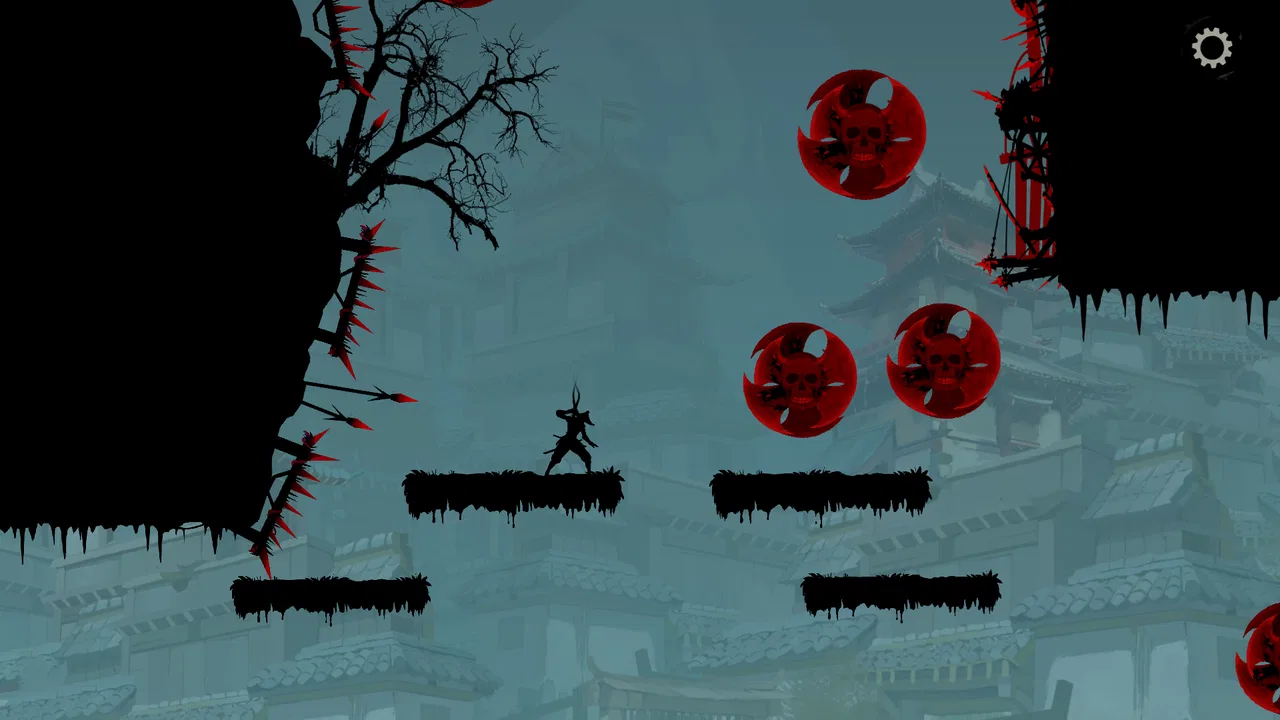
Ninja Arashi 2 Shadow's Return
- 4.4
- Rating
- 5.00M
- Installs
- Free
- Price

 Analysis by App-foxy
Ninja Arashi 2 Shadow's Return is the kind of adventure game I pick up when I want focused action rather than a long conversation-heavy campaign. It puts a ninja warrior into dangerous platforming situations, where movement, timing, and quick reactions matter more than simply charging forward. After spending time with it, I found the experience most appealing in short, concentrated sessions: a few attempts at a difficult section, a better understanding of the hazards, and then one satisfying run that finally works.
The game comes from Black Panther and is free to install, with optional in-app purchases priced from $1.99 to $4.99 per item. It is rated Teen, so I would not treat it as a universal children’s game. The current release is version 1.4 and it runs on Android 8.0 or later. Those details make it fairly approachable for many Android players, but the real question is whether you enjoy learning through failure. This is not a relaxed sightseeing adventure. It expects attention, patience, and a willingness to repeat a section until your hands understand the timing.
What the first play session feels like
The opening impression is direct: you control a shadowy ninja in an action platformer built around movement through threatening spaces. The appeal is not complicated to explain, but it is easy to underestimate. A jump that looks simple may require better positioning than expected, and an enemy encounter can become harder when it appears beside a hazard or narrow landing area. I quickly stopped thinking of each obstacle as an isolated problem and started reading the whole route before moving.
You May Also Like

 Blood Strike: 2.5 Anniversary
Blood Strike’s Loadouts Turn Every Drop Into a Tactical Gamble
A close look at Blood Strike’s custom loadouts: how fast access to signature weapons reshapes its battle royale rhythm, rewards preparation, and narrows the gap between fights.

 Pandora - Music & Podcasts
Pandora’s Music Is Easy to Start, but Harder to Recover
Pandora’s strength is its low-effort path from a seed to a station. Its weak spot is how much confidence it asks you to place in connection, setup, and quiet recovery.

 8 Ball Pool
 Is Built on Rivalries, Rematches, and Routine
A close look at the rivalries, rematches, shared routines, and unanswered safety questions that turn a quick pool match into a persistent mobile community.

 Samsung Music
’s Quiet Strength Is Playing What You Already Own
Its reach comes less from spectacle than from dependable access to a personal library. That simplicity is both the app’s strongest retention engine and its ceiling.

 AccuWeather: Weather Radar
AccuWeather Review: A Quick, Clear Forecast for Everyday Decisions
For everyday plans, the best forecast is the one you can understand quickly. AccuWeather makes rain timing, radar, and local conditions easy to act on, with a few trade-offs.

 Hill Climb Racing
Why Hill Climb Racing Still Turns Crashes Into One More Run
A tiny car, a bumpy hill and one more upgrade: Hill Climb Racing keeps resurfacing because its simple chaos makes every near-miss feel personal.
More From Our News Desk



That change in attitude is important for newcomers. If you approach every screen by rushing, you may assume the game is unfair when the real issue is poor preparation. I had better results when I paused briefly to notice the order of threats, then committed to one action at a time. The most useful early habit is to separate movement from attacking in your mind. A safe landing is often more valuable than a dramatic strike, especially when a missed jump can undo several good decisions.
The game’s adventure identity comes through its combination of forward progress, combat pressure, and platforming. It is not just an arena where enemies appear in a flat space, and it is not a pure precision platformer with no confrontation. That mixture gives the sessions their rhythm. I might spend one moment judging a gap, then immediately adjust because an opponent changes the safe place to land. The result feels more active than a basic jump-and-run game, but it also demands more concentration.
Players familiar with fast mobile action games will recognize the general appeal, yet this feels more deliberate than an endless runner. An endless runner usually rewards staying in motion and reacting to whatever arrives next. Here, I found that observation and controlled progress were more useful. Compared with a casual platformer, it also asks for more tolerance of mistakes. If you want something you can play with almost no mental effort, this probably is not the best match.
The audience response is strong: the game holds a 4.6 average from around 16 thousand ratings and has passed one million installs. I see those figures as a sign that the central formula connects with a substantial Android audience, not as a guarantee that every player will enjoy the difficulty. The Teen rating is also worth remembering if you are choosing a game for a younger player or looking for something deliberately gentle.
Getting ready without overthinking the start
Installation is straightforward because the game is free, but I would still approach the first launch with the right expectations. Free access does not mean the experience is designed to be effortless, and optional purchases can be tempting if you become stuck. My advice is to play through the opening stretch before spending anything. You need to learn whether the movement and challenge suit your hands first; buying an item cannot turn an uncomfortable control style into a comfortable one.
Version 1.4 is the release I would look for when starting, and Android 8.0 is the minimum operating system requirement. On a compatible phone, the practical preparation is simple: keep the screen clean, use a grip that lets your thumbs move naturally, and avoid beginning a difficult section while distracted. These sound like small details, but touch controls punish awkward holding positions. I noticed that many “bad” attempts were really caused by hurried fingers and poor attention rather than a lack of understanding.
I also recommend starting with a short session rather than deciding immediately that you will finish a large portion of the game. The early goal should be familiarity. Learn how your character responds to a jump, how quickly you can change direction, and how much room you need before an attack. Treat the first few minutes as calibration. That makes later failures more informative because you can tell whether the problem was timing, positioning, or an enemy encounter.
The purchase range of $1.99 to $4.99 per item is modest compared with many larger mobile games, but the decision still deserves care. I would only consider an optional purchase after identifying a specific problem it solves. Spending because frustration is high is usually a poor reason. The free starting experience gives you enough information to decide whether the game deserves additional money, and patient practice is often the better first response to a difficult passage.
How to reach the first meaningful success
For a first-time player, “success” should not mean clearing a large amount of content immediately. I would define it as completing a troublesome sequence while staying in control: moving through a hazard, handling the nearby threat, and reaching the next safe point without relying on blind luck. That first clean sequence teaches more than a rushed victory because you can remember why it worked.
My most useful approach was to build a mental route in small pieces. I watched the first hazard, chose a landing area, and only then considered the enemy beyond it. Trying to solve the entire screen at once created unnecessary panic. Once the first movement became reliable, I added the next action. This method is especially helpful on a phone, where the display is compact and several threats can compete for your attention.
Use failed attempts as experiments rather than verdicts. If you miss the same jump repeatedly, change one variable: begin from a different position, wait a fraction longer, or approach the edge with less speed. Changing everything at once makes it impossible to learn. I found that a single adjustment often revealed the real issue. This is one of the game’s strongest qualities: when a successful attempt follows a clear correction, progress feels earned rather than random.
Combat deserves the same discipline. I would not attack automatically whenever an opponent enters view. First decide whether the attack will leave you standing in a safe place. In a platforming environment, a technically successful hit can still be a bad exchange if it pushes you toward a hazard or interrupts the next jump. The better sequence is often movement first, attack second, then a brief repositioning before continuing.
For an everyday example, imagine playing during a commute or while waiting for an appointment. You have only a few minutes, so choose one troublesome section and study it instead of trying to make a long run. On the first attempt, observe. On the second, correct the earliest mistake. On the third, repeat the improved opening and focus on what follows. This turns a short session into useful practice and avoids the frustration of ending after several unfocused failures.
Where new players commonly lose confidence
The biggest confusion is assuming that forward movement is always the correct priority. In many action games, hesitation feels dangerous. Here, hesitation can be the smart move when it helps you read the next threat. I became more consistent once I stopped treating every pause as wasted time. A moment spent checking the route can prevent a longer restart.
Another common mistake is blaming the controls before checking the starting position. A jump attempted from the wrong place may feel unresponsive even when the input is correct. Before deciding that a section is impossible, repeat it while standing in a slightly different spot. This is a practical troubleshooting step that costs little and often explains why the same command produces different results.
Players may also confuse progress with speed. Moving quickly looks impressive, but it can hide weak habits. If you reach a new area while barely surviving the previous one, the next challenge may expose the same problem under greater pressure. I prefer a slower first clear, because it gives me a stable pattern to build on. Speed becomes worthwhile later, after the route is familiar.
Optional purchases can create another kind of confusion. Because the game is free, a newcomer may wonder whether paying is necessary to enjoy it. My experience suggests that the first decision should be about fit, not advantage. Play enough to understand the basic loop, then decide whether an item would genuinely improve your experience. If you dislike repeating difficult sections, spending may not solve the underlying issue; a different, more forgiving adventure game could be a better choice.
The Teen content rating should also guide expectations. I would choose something else for a very young child, particularly if the goal is a calm, simple game with minimal pressure. The rating does not automatically make the game unsuitable for every teenager, of course, but parents should consider the combination of action intensity, challenge, and optional purchases before handing it over without discussion.
Small techniques that make the game easier to read
One technique that helped me was to identify the “commitment point” before acting. This is the last position where I can still change my plan safely. Once I pass it, the jump or attack is already underway. Recognizing that point makes timing less mysterious. Instead of reacting after the mistake begins, I make the decision where there is still room to correct it.
A second technique is to practice the dangerous action independently in your attention, even when the surrounding route is easy. If one jump causes most failures, treat the safe approach before it as preparation. Arrive with the character positioned and your next input already chosen. This reduces the mental load of making several decisions at once and is more reliable than improvising at the edge.
I also found value in preserving a successful pattern. When a sequence works, do not immediately speed it up. Repeat it at the same pace once or twice so your hands remember the movement. Only then experiment with faster execution. This matters in a game where confidence can lead to overcorrection. A stable pattern gives you something to return to after a failed attempt.
Finally, separate “I do not understand this” from “I understand it but executed badly.” The first problem calls for observation; the second calls for repetition and a small timing adjustment. That distinction prevents unnecessary frustration. It also tells you when to take a break. If every attempt is becoming more hurried, a short pause is more useful than continuing to feed the same mistake.
Who will enjoy the longer-term challenge
I would recommend this adventure to players who like action platformers with a darker ninja atmosphere and a clear emphasis on mastery. It suits people who enjoy replaying a section to improve one movement, one encounter, or one route. It is also a good fit for mobile players who prefer sessions that can be divided into focused attempts rather than games that require a long uninterrupted story segment.
It is less suitable for someone seeking a purely relaxing game, a narrative-first adventure, or a platformer that forgives nearly every mistake. Players who dislike repetition may lose patience, especially if they expect constant new content instead of gradual improvement. I would also steer very young children toward a simpler title because of the Teen rating and the more demanding action focus.
Compared with a conventional casual platformer, the main trade-off is depth versus ease. This game gives each movement more consequence, which makes a clean run satisfying, but it raises the cost of careless play. Compared with an endless runner, it offers more room for planning and deliberate correction, while sacrificing the instant, low-commitment flow that makes runners convenient. Compared with a story-led adventure, it puts the hands and eyes to work more often than the dialogue or plot.
My recommendation after learning the rhythm
After getting past the initial urge to rush, I found Ninja Arashi 2 Shadow's Return most rewarding when I treated it as a timing practice game wrapped in an adventure setting. The strongest moments came from turning a failed sequence into a repeatable one. That feeling is specific and satisfying: I am not merely lucky enough to pass; I understand the route well enough to do it again.
Black Panther has kept the entry point accessible with a free game, a current version of 1.4, and support for Android 8.0 and later. The optional items, priced between $1.99 and $4.99, mean I would approach purchases cautiously, but they do not change my basic recommendation. Start free, test the controls, and decide based on how much you enjoy the challenge rather than on a moment of frustration.
If your first session feels difficult, do not judge the whole game from one failed section. Use the observation-first method, change one input or position at a time, and aim for one controlled success. If that process feels satisfying, you have probably found the right kind of adventure. If it feels like tedious repetition, choose a gentler platformer or a more relaxed mobile game instead.
My final view is positive, with a clear condition: this is best for players who enjoy earning progress through practice. It has enough action to keep short sessions engaging, enough platforming pressure to reward careful play, and a distinctive ninja focus that gives the adventure its identity. I would recommend trying it to anyone who wants a demanding mobile action game, while being honest that patience is part of the price of admission even though the download itself is free.
FAQs for Ninja Arashi 2 Shadow's Return
01What is Ninja Arashi 2: Shadow's Return about?
Ninja Arashi 2: Shadow's Return is an action-packed platformer game where you play as Arashi, a former legendary ninja. The game continues Arashi's story as he escapes from a frozen prison and embarks on a quest to rescue his kidnapped son from the evil shadow demon, Dosu. With its captivating storyline and challenging gameplay, this sequel offers an immersive experience for fans of the genre.
02What are the key features of Ninja Arashi 2?
Ninja Arashi 2 boasts several key features that enhance gameplay. Players can enjoy stunning graphics and atmospheric environments, a variety of challenging levels, and fluid combat mechanics. The game also offers character customization, allowing players to upgrade Arashi's abilities and weapons. With its engaging storyline and dynamic gameplay, Ninja Arashi 2 keeps players on their toes.
03Is Ninja Arashi 2 free to play?
Yes, Ninja Arashi 2 is free to download and play on both Android and iOS platforms. However, the game includes in-app purchases that allow players to buy items or upgrades to enhance their gameplay experience. While optional, these purchases can provide advantages or speed up progress within the game.
04What are the system requirements for Ninja Arashi 2?
For Android devices, Ninja Arashi 2 typically requires Android 4.1 and up. For iOS, it usually requires iOS 10.0 or later. It's recommended to have a stable internet connection for downloading updates and accessing certain features. Ensure your device has sufficient storage space and meets these requirements for optimal performance.
05How challenging is Ninja Arashi 2 for new players?
Ninja Arashi 2 offers a balanced challenge, suitable for both new and experienced players. The game starts with easier levels to help players get accustomed to the controls and mechanics. As players progress, levels become more challenging, requiring strategic thinking and quick reflexes. The gradual increase in difficulty ensures a rewarding experience for all skill levels.
Pros
- Engaging storyline with deep lore.
- Smooth and intuitive controls.
- Stunning graphics and animations.
- Challenging levels with strategic depth.
- Frequent updates with new content.
Cons
- In-app purchases can be costly.
- Occasional lag in high-action scenes.
- Limited character customization.
- Some levels can feel repetitive.
- Ads can interrupt gameplay.

Ninja Arashi 2 Shadow's Return
Gallery